Okay, so check this out—spot trading is where most folks start. It’s straightforward on paper, but the first-time friction can be maddening. Seriously? Yep. My first trade felt like driving in Brooklyn during rush hour—chaotic, exciting, and a little terrifying.
If you’re trying to sign in to OKX, here’s the deal: you want speed, security, and clarity. My instinct said to rush through verification. Bad idea. Slower setup means fewer headaches later. Initially I thought the onboarding was a one-off chore, but then realized good habits pay dividends—especially when markets move fast and your fingers don’t.
First impressions matter. The OKX interface is uncluttered once you get used to it. But the sign-in and safety settings hide in sensible places, which is great… until you’re late and panicking because you can’t transfer funds. So take five minutes now. Set up two-factor auth. Link your email and phone. If you need the web sign-in, use this official page for a smooth start: okx login.
Signing in: practical steps and things people skip
Step one: create an account with a clean email. Don’t reuse a decade-old address that you never check. Step two: verify identity (KYC). It’s annoying, but required. Step three: enable 2FA.
Whoa! That 2FA bit is crucial. Use an authenticator app, not SMS, if you can. SMS is fine in a pinch, but it feels flimsy. I’m biased toward Authy or Google Authenticator. I’m not 100% sure which is absolutely best for everyone, but using an authenticator app is a solid middle ground.
When you sign in, watch for these subtle things: unusual sign-in location alerts, new-device email notices, and permission prompts. If something felt off about a session, log out and change your password. Seriously—do it. That little nagging gut feeling pays off.
Spot trading basics on OKX
Spot trading means you buy or sell the real asset. No leverage. No complicated funding fees. That simplicity has a comfort to it. It’s like choosing a classic burger over some over-the-top chef special—satisfying and predictable.
Here’s what to watch:
- Order types: market orders execute fast; limit orders give price control.
- Fees: maker vs taker. Read them once. Then forget them until they bite you.
- Slippage: smaller orders usually avoid surprises. Big orders? Break them up.
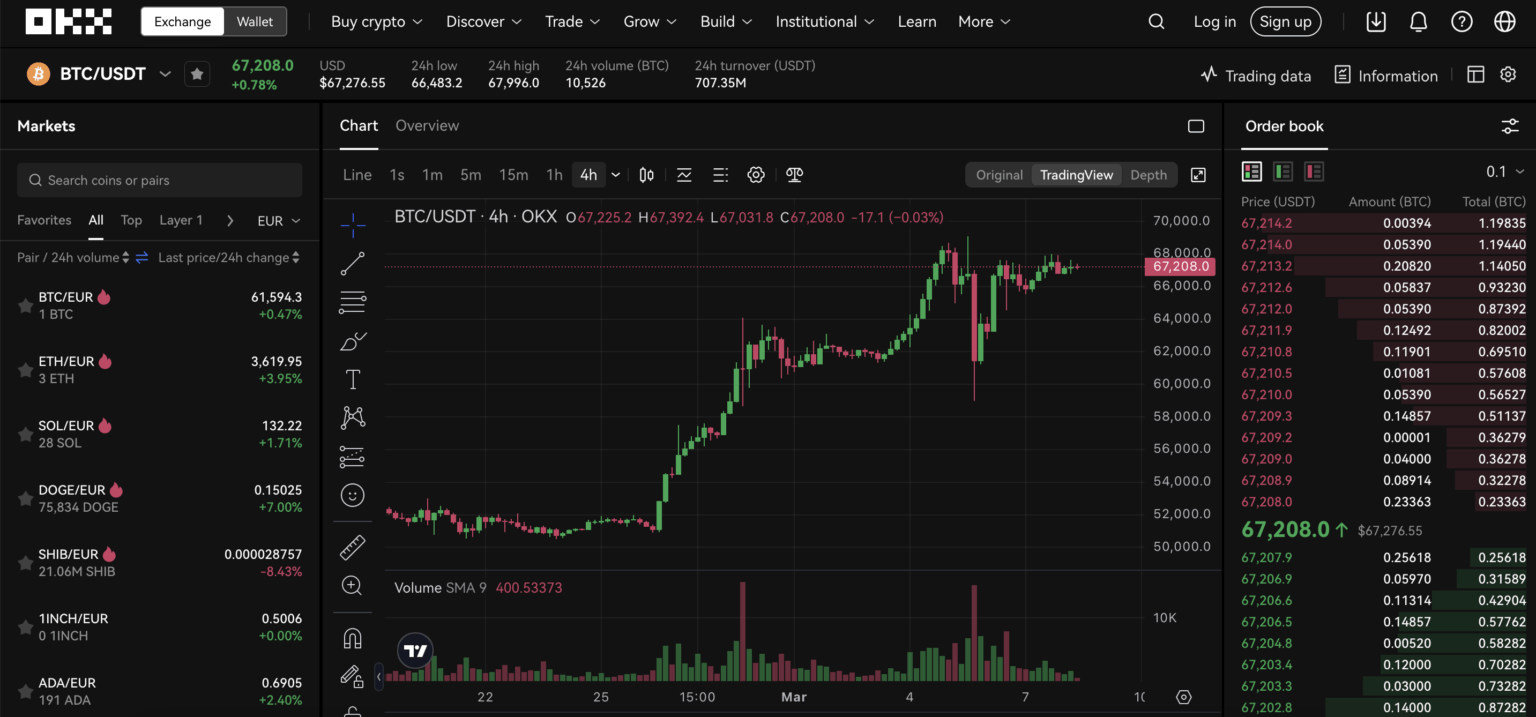
On OKX, the spot interface displays order book depth and recent trades. You can move from viewing charts to placing an order in a handful of clicks. That speed is good—for better and worse. If you’re impulsive, set deliberate limits.
Also: stablecoins are the usual bridge between fiat and crypto. USDT and USDC are common. If you’re in the US, be mindful of which stablecoin you trust for custody decisions. I’m not giving legal advice; just saying what I’ve seen in practice.
Advanced tips that traders learn the hard way
One: test with small amounts. Always. Two: check withdrawal whitelist options. That feature saves you from accidental transfers. Three: understand tax records. Keep screenshots or export CSVs for your trades. Oh, and by the way… some of these platforms update UI elements without clear notices. So a familiar button can move overnight.
On the analytical side, think about liquidity and spreads. High market cap tokens are easier to enter and exit. Low-cap stuff might look tempting, but it often traps money. On one hand, volatility offers gains; though actually, it also amplifies losses if you aren’t careful.
For charting, the built-in tools on OKX are solid for basic technicals. If you’re serious, link a dedicated charting platform—TradingView integrates nicely. I tend to use a combo: quick checks on exchange charts, deeper analysis off-platform. It keeps me nimble.
FAQ
How do I sign in if I forgot my password?
Use the “Forgot password” flow on the sign-in page. You’ll get an email link. If that email doesn’t come, check spam and verify your account email. If issues persist, contact support—be ready to verify identity.
Is two-factor authentication required?
Not always required, but strongly recommended. Use an authenticator app when possible. It reduces risk dramatically. SMS is better than nothing, but it’s not ideal.
Can I spot trade with fiat on OKX?
Yes. OKX supports fiat on-ramps in many regions. In the US, options vary by state and over time. Expect to go through bank verification and ID checks.
What are common mistakes new spot traders make?
They skip risk management, ignore fees, and trade on emotion. Quick tip: set a stop or a plan before you click buy. Markets don’t care about your feelings—learn that fast.
I’ll be honest: the platform isn’t perfect. This part bugs me—the occasional UI shuffle and surprise email change alerts. But overall, OKX is competitive for spot needs. If you’re starting now, keep it simple. Learn the ropes with small trades. And remember—crypto rewards patience as much as it does courage.
One last thing: bookmark the official sign-in link, keep credentials private, and remember somethin’ that traders forget all the time—log out of shared devices. Happy trading, and stay curious.